
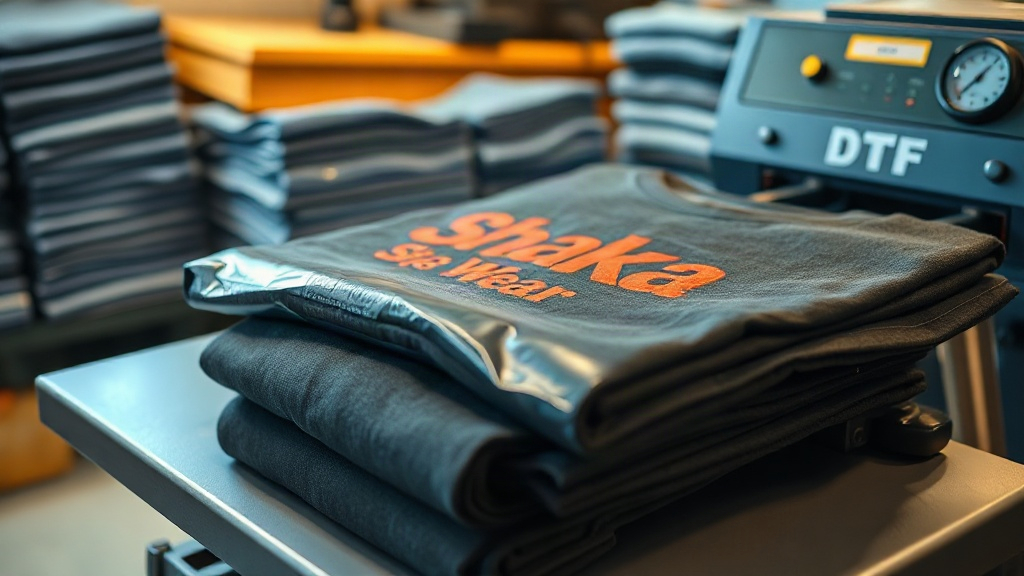
When you pull a freshly pressed shirt off your heat press, the last thing you want is a cracked, faded design. Yet many custom apparel businesses struggle with DTF transfers that don't live up to expectations. The culprit often isn't the transfer itself, but the blank it's pressed onto. That's where smart blanks come in. By pairing the right blank with the right technique, you can achieve results that look professional and last wash after wash. In this guide, we'll explore why blank selection matters, spotlight Shaka Wear as a top choice, and dive deep into DTF transfers so you can elevate your custom apparel game.
Why Smart Blanks Are the Foundation of Quality DTF Transfers
Not all t-shirts are created equal. The fabric content, weave, weight, and finish all influence how a DTF transfer adheres and ages. Smart blanks are garments specifically engineered to work well with heat-applied transfers. They typically feature a tight weave, minimal sizing, and consistent thickness, which allows the adhesive to bond evenly. When you press a DTF transfer onto a subpar blank, you risk uneven curing, poor wash durability, and a design that feels stiff or plastic-like. Smart blanks eliminate these variables, giving you a reliable canvas every time.
Moreover, smart blanks often come pre-shrunk and have a smooth surface, reducing the chance of pinholes or texture showing through the transfer. This is especially important for detailed designs with fine lines or gradients. If you're selling custom apparel, consistency is key to building trust with your customers. Using smart blanks ensures that every order meets your quality standards.
Shaka Wear: A Cut Above the Rest
Among the many blank brands available, Shaka Wear has earned a loyal following among screen printers and DTF enthusiasts alike. Known for their heavyweight cotton and superior construction, Shaka Wear tees offer a premium feel that customers notice immediately. Their fabrics are combed and ring-spun, resulting in an ultra-soft hand that doesn't sacrifice durability. For DTF transfers, this smooth surface is ideal because it allows the transfer to sit flush against the fabric, minimizing texture interference.
Shaka Wear also offers a variety of styles, from classic crew necks to trendy oversized fits. Their consistent sizing and colorfast dyes mean your transfers will look vibrant and true to color. Whether you're printing a single custom shirt or a bulk order, Shaka Wear provides a dependable foundation that enhances the final product.
Key Features of Shaka Wear Blanks
- Heavyweight fabric: Typically 5.5 oz to 6.5 oz, providing a substantial feel that drapes well.
- 100% combed ring-spun cotton: Ultra-soft and smooth, perfect for DTF adhesion.
- Pre-shrunk: Minimizes shrinkage after washing, preserving the transfer's integrity.
- Double-needle stitching: Enhances durability at stress points.
- Wide color range: From classic neutrals to bold hues, suitable for any design.
DTF Transfers: A Game-Changer for Custom Apparel
Direct-to-film (DTF transfers) have revolutionized the custom apparel industry. Unlike traditional screen printing, DTF doesn't require color separation or minimum order quantities. You can print full-color, photographic-quality designs on demand. The process involves printing your design onto a special film, coating it with adhesive powder, and then heat-pressing it onto the garment. The result is a vibrant, flexible print that stretches with the fabric and withstands repeated washing.
But DTF isn't without its nuances. The quality of the transfer depends heavily on the blank's surface. A rough or heavily textured fabric can prevent the adhesive from fully penetrating, leading to premature peeling. That's why pairing DTF with smart blanks like Shaka Wear is a winning combination. The smooth, tight-knit surface allows for optimal adhesion, while the heavyweight cotton provides a solid base that won't distort during pressing.
How to Achieve Flawless DTF Transfers on Shaka Wear
- Pre-press the garment: This removes moisture and wrinkles, creating a smooth surface. Press for 5-10 seconds at 300°F.
- Position the transfer: Place the DTF transfer with the design facing up. Use heat tape if needed to secure it.
- Press with medium pressure: Set your heat press to 300-325°F for 10-15 seconds. Too much pressure can cause the adhesive to spread and lose detail.
- Peel cool: Wait until the transfer is completely cool before peeling the film. This ensures the adhesive has fully bonded.
- Post-press for durability: Cover with parchment paper and press again for 5-10 seconds to enhance wash resistance.
Following these steps on a Shaka Wear tee will yield a professional finish that rivals screen printing. Remember, every heat press varies, so always test with a scrap piece first.
Choosing the Right Smart Blanks for Your DTF Projects
Not all smart blanks are suitable for every DTF project. Consider the end use: if you're creating athletic wear, look for moisture-wicking polyester blends. For casual tees, 100% cotton like Shaka Wear is unbeatable. Also, consider the color of the blank. DTF transfers are opaque, but a white underbase is often printed to ensure vibrancy on dark garments. On light colors, the transfer may appear slightly translucent, so a white base is still recommended for consistent results.
Another factor is fabric weight. Heavier fabrics like Shaka Wear's 6.5 oz tees provide a premium feel and help the transfer lay flat. Lighter fabrics may require lower pressure to avoid press marks. Always check the blank manufacturer's guidelines for heat press settings.
Troubleshooting Common DTF Issues on Blanks
Even with smart blanks, you might encounter issues. Here's how to troubleshoot:
- Transfer peeling after wash: Likely insufficient pressure or incorrect temperature. Increase pressure and ensure even heat distribution.
- Cracking: Often caused by over-stretching the garment before cooling. Allow the transfer to cool completely before handling.
- Dull colors: May indicate under-curing. Increase press time or temperature slightly.
- Adhesive residue on film: If the film peels off too easily, the transfer wasn't pressed long enough. Extend press time.
With Shaka Wear's consistent fabric, these issues are less likely, but always keep a log of your settings for future reference.
Frequently Asked Questions
What makes Shaka Wear a good choice for DTF transfers?
Shaka Wear tees are made from 100% combed ring-spun cotton with a tight weave and smooth surface, which allows DTF transfers to adhere evenly and resist cracking. Their heavyweight fabric also provides a premium feel that customers love.
Can I use DTF transfers on 50/50 blends?
Yes, DTF transfers work on 50/50 blends, but the lower cotton content may affect the hand feel and durability. For best results, use a higher cotton percentage like Shaka Wear's 100% cotton tees.
How do I prevent DTF transfers from fading after washing?
Wash the garment inside out in cold water and tumble dry on low. Avoid fabric softeners and bleach. Also, ensure your transfer is properly cured with a post-press.
What pressure should I use for DTF on Shaka Wear?
Medium pressure is ideal. Too much pressure can cause the adhesive to spread and lose detail. Start with medium and adjust based on your heat press.
Do I need a special printer for DTF transfers?
Yes, DTF requires a specialized printer with DTF inks and film. However, you can also purchase pre-printed transfers from suppliers and apply them with a standard heat press.