
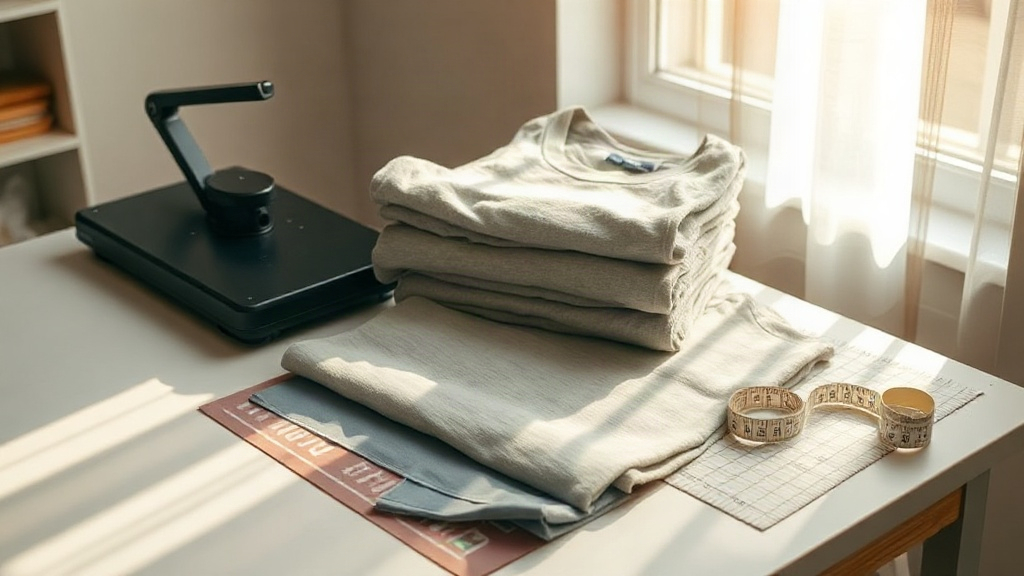
You can own a top-tier press, mix your powders perfectly, and still watch a print crack after three washes. More often than not, the culprit is not the transfer at all. It is the shirt underneath it. Choosing smart blanks is the least glamorous part of a print shop's workflow, yet it quietly decides whether your finished product survives ten washes or falls apart in the dryer. This guide walks through what actually matters when pairing garments with dtf transfers, from fiber content and weave to the brands that hold up under real production pressure.
What Makes a Blank "Smart" for DTF Work
The term gets thrown around loosely, but a genuinely smart blank is one that behaves predictably through the entire process: printing, pressing, packing, and the customer's laundry routine. That means three things need to line up. The fabric has to accept the adhesive film evenly, the surface has to stay flat under heat and pressure, and the garment needs enough structural integrity to keep the print from distorting as it stretches and relaxes.
Cotton-rich blends tend to be the safest bet. A 100% cotton tee gives the adhesive a fibrous surface to grip, which is why so many shops default to it. Ring-spun cotton, in particular, has a smoother, denser face than open-end cotton, so the transfer sits flatter and the edges look cleaner. When you press a detailed design onto a rough, low-quality blank, you can see the texture of the fabric poking through the ink. That texture never goes away, and it makes even a well-made transfer look cheap.
Fiber Content and Adhesion
Polyester changes the equation. It is slicker, it absorbs less, and it reacts to heat differently than cotton. On a 100% polyester performance shirt, DTF adhesive can struggle to lock in unless you adjust temperature and dwell time carefully. Many printers find that a 50/50 cotton-poly blend hits a sweet spot: enough cotton for grip, enough poly for durability and color retention. The key is to know your blend before you press, not after a customer complains.
Weave Density and Print Detail
Two shirts can both say "100% cotton" and still print completely differently. A tight, combed ring-spun weave holds fine lines and small text far better than a loose, budget-friendly knit. If your design has thin lettering or halftone gradients, weave density matters as much as the transfer itself. Run a test press on any new blank before committing to a bulk order. A single test shirt costs far less than reprinting a hundred-piece run.
Why Brand Consistency Saves You Money
Every blank brand has its own quirks. Some run a half size small, some shrink more than expected, and some have a finish that needs a longer pre-press. Once you find a supplier whose garments press cleanly and consistently, staying loyal to that source removes a whole category of variables from your workflow.
This is where a label like shaka wear earns its reputation in print shops. The brand is known for heavyweight, streetwear-style tees that hold their shape and give DTF adhesive a stable surface to bond with. Heavyweight cotton is not just about feel; the extra fabric density means less puckering around the print edges and a garment that does not warp after a few cycles in the wash. For shops producing hoodies, oversized tees, and retail-style drops, that structural stability is worth the slightly higher cost per unit.
Consistency also protects your reputation. If a customer buys the same design twice and the second shirt fits or feels different, they blame you, not the blank supplier. Locking in a reliable brand and sticking with it is one of the simplest quality-control moves a small shop can make.
Matching Blanks to the Right DTF Transfer
The blank and the transfer are a partnership, not two separate decisions. A few practical pairings tend to work well across most shops.
- Heavyweight cotton tees: Ideal for bold graphics, large front prints, and designs with solid color blocks. The dense fabric keeps edges crisp.
- Tri-blend shirts: Great for soft, vintage-style designs, but expect more stretch, so keep fine detail to a minimum.
- Performance polyester: Works for athletic wear with adjusted press settings, but test adhesion thoroughly before selling.
- Fleece and hoodies: Need a longer pre-press to remove moisture and flatten the surface, especially around seams and pockets.
For detailed multi-color artwork, a smooth ring-spun cotton blank will almost always outperform a textured or slub fabric. Slub and heathered fabrics look great on their own, but their uneven surface can interrupt fine lines. If a customer insists on a textured blank, simplify the design or increase line weight so the print still reads clearly.
Pre-Press Steps That Protect the Print
Even the best blank can fail if you skip preparation. Moisture is the quiet enemy of DTF adhesion. Fabric that has been sitting in a humid warehouse holds water vapor, and that vapor turns to steam under the press, creating bubbles and weak spots. A short pre-press of five to ten seconds removes surface moisture and smooths wrinkles before the transfer goes down.
- Pre-press the garment for 5 to 10 seconds to remove moisture and flatten the weave.
- Position the transfer and apply firm, even pressure across the whole design.
- Let the garment cool completely before peeling the film, unless your film specifies a hot peel.
- Do a stretch test on a scrap piece to confirm the adhesive has fully bonded.
Cooling matters more than most people realize. Peeling too early while the adhesive is still soft can pull fine details out of place. Patience here saves reprints later.
How to Test a New Blank Before Bulk Buying
Never commit to a full case based on a supplier photo. Order a sample, press your most detailed design onto it, and run it through a realistic wash cycle. Check three things: whether the edges lift, whether the colors stay vivid, and whether the shirt itself shrinks or twists. If all three pass, you have a blank worth stocking.
Keep a simple log of every blank you test, including brand, blend, weight, press settings, and wash results. Over a few months, that log becomes your most valuable production tool. It turns guesswork into a repeatable process, and repeatable processes are what separate hobby printers from shops that ship consistent work.
Frequently Asked Questions
Can I use DTF transfers on 100% polyester shirts?
Yes, but polyester requires lower press temperatures and careful testing. The slick surface holds adhesive differently than cotton, so always run a sample and check adhesion after a wash before selling polyester garments.
Do smart blanks really matter more than the transfer quality?
Both matter, but a great transfer on a poor blank will still fail. The blank controls how the print sits, stretches, and survives washing, so it deserves the same attention you give your film and powder.
Why do heavyweight tees like Shaka Wear work well for DTF printing?
Heavier fabric holds its shape under heat and pressure, which reduces puckering and edge distortion. The denser weave also gives the adhesive a more stable surface, so prints tend to last longer through repeated washes.
How do I stop DTF prints from cracking after washing?
Start with a cotton-rich blank, pre-press to remove moisture, use even pressure, and let the garment cool fully before peeling. Advise customers to wash inside out in cold water and skip the dryer when possible.
Should I wash-test every new blank I consider?
Yes. A wash test is the only reliable way to see how a blank and transfer behave together over time. It takes a day and saves you from ordering a case of garments that cannot hold a print.