
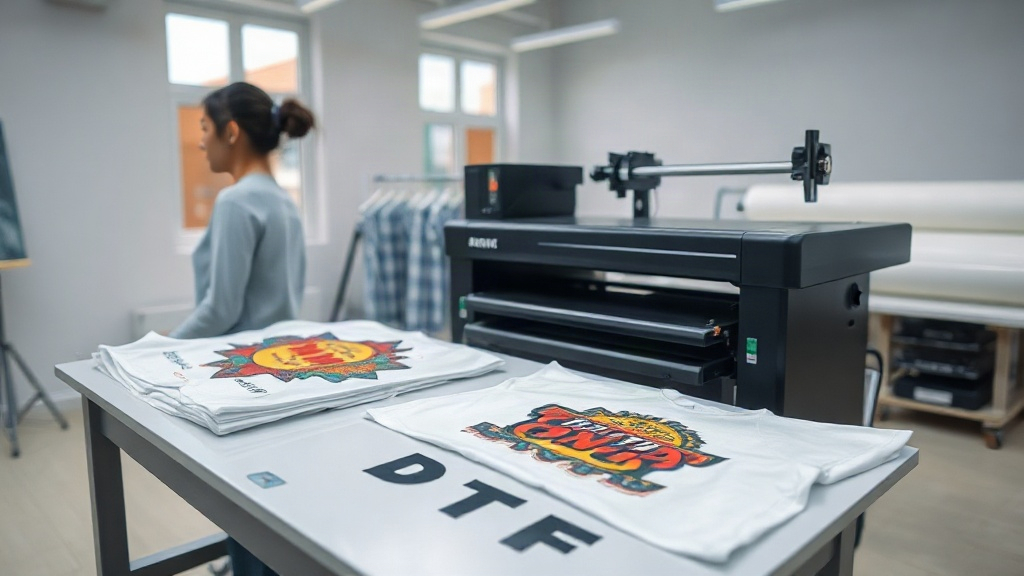
If you run a print on demand (POD) business, you know that the printing method you choose can make or break your product quality and customer satisfaction. DTF printing, which stands for Direct to Film, has been gaining serious traction in the POD world. Unlike traditional methods, DTF allows you to print vibrant, detailed designs onto a wide range of fabrics with impressive durability. In this guide, we'll dive into what DTF printing is, how it compares to other techniques, and how you can leverage it to grow your POD business. Whether you're a seasoned seller or just starting out, understanding DTF can give you a competitive edge.
What is DTF Printing?
DTF printing is a relatively new technology that involves printing your design onto a special film, coating it with adhesive powder, and then transferring it to the fabric using a heat press. The process is straightforward: first, you print your artwork onto a PET film using specialized DTF inks. Then, you apply a hot melt adhesive powder to the wet ink, shake off the excess, and cure the powder with heat. Finally, you place the film on your garment and press it with a heat press to transfer the design. The result is a soft, stretchable, and highly durable print that bonds well to cotton, polyester, blends, and even treated nylon. This versatility makes DTF a game-changer for POD businesses that offer a variety of products.
Why DTF is a Game-Changer for Print on Demand
Print on demand is all about efficiency, customization, and scalability. DTF printing aligns perfectly with these needs. Here's why:
- No minimum order quantity: You can print one-off designs without setup costs, ideal for POD.
- Works on multiple fabric types: Unlike DTG, which works best on 100% cotton, DTF adheres to cotton, polyester, blends, and more.
- Vibrant colors: DTF inks produce bright, opaque colors even on dark garments.
- Durability: The prints resist cracking, peeling, and fading after multiple washes.
- No pre-treatment: Save time and money by skipping the pre-treatment step required for DTG.
These advantages mean you can offer a wider range of products, from t-shirts and hoodies to tote bags and hats, without investing in multiple printing setups.
DTF vs. DTG: Which is Better for Your POD Business?
Direct to Garment (DTG) printing has been a staple in POD for years, but DTF is quickly becoming a preferred alternative. Let's compare the two:
Fabric Compatibility
DTG works best on 100% cotton; on polyester, the colors may appear dull and the print may wash out. DTF, however, bonds to a wide range of fabrics, including polyester, cotton blends, and even leather. This flexibility allows you to offer more products without worrying about fabric limitations.
Color Vibrancy and Detail
DTF printing uses pigment-based inks that sit on top of the fabric, resulting in brighter and more opaque colors, especially on dark garments. DTG inks are absorbed into the fabric, which can lead to muted colors on dark shirts. For intricate designs with fine details, DTF often produces sharper results.
Durability and Washability
Both methods can be durable if properly applied, but DTF prints tend to withstand more washes without fading or cracking. The adhesive powder creates a strong bond that flexes with the fabric, reducing the risk of peeling.
Cost and Efficiency
DTG requires pre-treatment of the garment, which adds time and cost. DTF eliminates that step, and the film can be prepared in advance, streamlining production. While DTF supplies (film, powder, ink) may have a higher upfront cost, the versatility and reduced labor often make it more cost-effective in the long run.
Ultimately, the choice depends on your product mix and customer base. If you primarily sell 100% cotton tees, DTG might suffice. But if you want to offer diverse fabrics and vibrant designs, DTF is the way to go.
How to Get Started with DTF Printing
Ready to integrate DTF into your POD workflow? Follow these steps:
- Choose a DTF printer: Options range from desktop models to industrial machines. Consider your production volume and budget. Popular brands include Epson and Roland, but there are also dedicated DTF printers from companies like STS and Prestige.
- Gather supplies: You'll need DTF film, DTF ink, hot melt adhesive powder, and a heat press. Ensure the film and powder are compatible with your printer and ink.
- Prepare your design: Create your artwork in a graphics program like Photoshop or Illustrator. Remember to mirror the image before printing, as the transfer will be flipped.
- Print and powder: Print your design onto the film, apply powder evenly, and shake off excess. Cure the powder with a heat gun or in an oven until it melts and becomes glossy.
- Heat press: Set your heat press to the recommended temperature (usually 300-320°F) and press for 10-15 seconds. Peel the film hot or cold, depending on the film type.
Practice makes perfect. Start with simple designs and gradually experiment with more complex ones.
Design Tips for Stunning DTF Prints
To get the most out of DTF printing, keep these design principles in mind:
- Use high-resolution images: 300 DPI or higher ensures crisp details.
- Add a white underbase: For dark garments, include a white layer under your colors to make them pop.
- Avoid very fine lines: While DTF can handle detail, extremely thin lines may not transfer perfectly.
- Test different fabrics: Each fabric may require slight adjustments in pressure, temperature, or time.
Also, consider the feel of the print. DTF transfers can be soft, but adding too much powder or over-pressing can make them stiff. Aim for a balance between durability and comfort.
Common Challenges and How to Overcome Them
Even with a reliable DTF setup, you might encounter issues. Here are some common problems and solutions:
Adhesive Powder Not Melting Properly
This could be due to insufficient heat or uneven powder application. Ensure your curing temperature is correct and apply powder evenly. If using an oven, preheat it and use a timer.
Print Cracking After Washing
Cracking often results from under-curing the powder or insufficient pressure during transfer. Increase curing time and pressure. Also, advise customers to wash garments inside out in cold water and avoid fabric softeners.
Colors Looking Dull
If colors appear muted, check your ink levels and print settings. Sometimes, using a higher ink density or adding a white underbase can enhance vibrancy. Also, ensure your film is compatible with your ink.
By troubleshooting systematically, you can maintain high-quality output.
Scaling Your POD Business with DTF
Once you've mastered DTF printing, you can scale your business in several ways:
- Offer more products: Expand beyond t-shirts to hoodies, caps, bags, and even shoes.
- Speed up production: Print multiple designs on a single film roll and press them quickly.
- Reduce waste: Unlike DTG, you can prepare transfers in advance and use them as needed.
- Attract niche markets: Create designs for specific interests, such as sports teams, hobbies, or events.
Remember, quality control is crucial. Inspect each transfer before pressing and regularly maintain your printer and heat press.
Frequently Asked Questions
What fabrics can I use with DTF printing?
DTF printing works on a wide range of fabrics, including cotton, polyester, blends, nylon, and even leather. It's particularly effective on dark and synthetic materials where other methods struggle.
How durable is DTF printing compared to screen printing?
When applied correctly, DTF prints are highly durable and can withstand 50+ washes without significant fading or cracking. They are comparable to screen printing in terms of longevity, though screen printing may have a slight edge for extreme durability.
Do I need a special printer for DTF?
Yes, you need a printer that is compatible with DTF inks, such as a modified Epson printer or a dedicated DTF printer. These printers are designed to handle the viscosity of DTF inks and the film.
Can I use DTF on 100% polyester?
Absolutely. DTF adheres well to polyester and other synthetic fabrics. In fact, it often outperforms DTG on polyester because the print sits on top of the fabric rather than being absorbed.
Is DTF printing cost-effective for small businesses?
Yes, especially for print on demand. With no minimum order requirements and the ability to print on demand, DTF eliminates waste and allows you to offer a wide range of products without large inventory investments.